

Leadership Is Not What We Think It Is
05/12/2026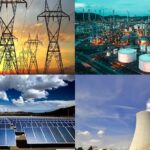
Canada Could be an Energy Superpower — If we Choose to Act Like One
06/09/2026
Canada should be thriving. At a moment when much of the world is struggling with political instability, institutional breakdown, energy insecurity, demographic collapse, and geopolitical fragmentation, Canada still possesses extraordinary advantages. We are resource-rich, politically stable, globally trusted, highly educated, strategically located, and deeply attractive to immigrants, investors, and global talent. By almost every historical measure, Canada should be exceptionally well-positioned for the century ahead. And yet, there is a growing feeling across the country that something is not working. Not collapsing. Not failing dramatically. But drifting. Slowing. Losing confidence in itself. Over the past number of months on The Brian Crombie Hour, I have spoken with economists, geopolitical analysts, housing experts, pollsters, historians, energy specialists, immigration researchers, public servants, and ordinary Canadians. While the subjects varied, the conversations kept circling the same uncomfortable truth: Canada’s problem is no longer potential. Canada’s problem is execution. And increasingly, cohesion.
Darrell Bricker, CEO of Ipsos Public Affairs, laid out the demographic reality starkly. Canada’s birth rate has collapsed to roughly 1.3 children per woman—far below replacement levels. We now have more Canadians over 65 than under 15. Single-person households are becoming the dominant social unit. Marriage and family formation are declining. And despite years of elevated immigration, population growth is already slowing again. Demographics are not ideology. They are a structural reality. Bricker raised another difficult question: Are we actually building the kind of country people want to live in? According to Ipsos polling, more than 80 percent of Canadians still prefer single-family homes in suburban or rural communities. Yet our planning systems increasingly push people toward smaller spaces, higher density, less ownership, and higher costs. The result is a growing disconnect between how institutions think people should live and how many Canadians actually want to live. And when systems become disconnected from lived reality, trust begins to erode.
That same tension emerged in my conversations with economists Don Drummond, Parisa Mahboubi, and Jim Stanford. For years, Canada relied heavily on population growth to drive economic growth. More people meant more workers, more consumers, and more GDP. But now we are discovering the limits of that model: housing shortages, healthcare strain, infrastructure pressure, and labour market mismatch. Meanwhile, productivity growth has stagnated badly. Drummond posed a painful but necessary question: Does Canada have an ambition deficit? Canadian businesses often grow successfully to a certain point and then plateau, sell out, or stop scaling altogether. Increasingly, we resemble a country very good at studying problems, forming committees, and announcing strategies—but less effective at building at scale. Stanford added another crucial dimension. Even where growth exists, many Canadians are not participating equally in it. He described a “K-shaped economy”—where one segment of society moves upward while another struggles simply to maintain stability. The top 1.5 per cent of Canadians now control roughly half of the country’s financial wealth. Asset prices rise. Stock portfolios rise. Luxury consumption rises. Meanwhile, much of the country faces housing stress, stagnant wages, rising food prices, debt pressure, and growing insecurity. GDP may rise while social cohesion weakens. And when younger Canadians no longer believe that hard work leads to stability, ownership, or upward mobility, societies become politically and emotionally fragile.
Nowhere is Canada’s contradiction more obvious than energy. Canada should be an energy superpower—not theoretically, but actually. We produce roughly five million barrels of oil a day. We possess enormous natural gas reserves, critical minerals, hydroelectric capacity, and among the lowest emissions intensity globally for many energy products. At a time when the world desperately needs stable democratic energy, Canada should be indispensable. Instead, we remain constrained by our inability to execute. Projects delayed. Infrastructure stalled. Regulatory uncertainty layered upon uncertainty. While the world reorganizes around energy security, Canada debates process. That is not strategy. It is paralysis. Yet Stanford cautioned against reducing national strategy to pipelines alone. More than 75 per cent of Canada’s economy is domestic. Housing, healthcare, services, infrastructure, communities, and local businesses matter just as much as exports. The real issue is not simply extraction. It is nation-building. Former senior federal official Eugene Lang explained why this problem increasingly feels structural. Canada’s institutions were built for a different era—one defined by stability, incrementalism, process management, and risk minimization. But the world now rewards speed, resilience, decisiveness, and execution. Increasingly, our systems struggle to adapt. The issue is no longer whether Canada has ideas. The issue is whether Canada can still act.
And Canadians feel that intuitively. Pollster John Wright noted that two-thirds of Canadians are worried about the economy. Housing pressure, affordability stress, inflation, and insecurity are widespread. Yet Canadians still want to believe. There remains patience in the system. There remains goodwill. But goodwill is not infinite. When institutions repeatedly fail to deliver visible results, trust declines quietly at first—through cynicism, withdrawal, polarization, and alienation. This is part of what we are seeing in Alberta. The separatist movement is not merely about geography or pipelines. It reflects a deeper feeling among many people that national systems no longer work for them. Personally, I believe separation would be disastrous economically, politically, and socially. But dismissing the frustration entirely would also be a mistake. Countries remain united not merely through constitutions, but through reciprocity—the belief that effort matters, contribution matters, fairness exists, and institutions still function. When people lose that belief, fragmentation grows. And underneath all of this lies something even deeper: emotional exhaustion. Recent conversations about digital overload, emotional safety, relationships, and mental health all point toward a similar reality: Systems shape people. And systems that produce perpetual insecurity, instability, alienation, and pressure eventually shape national psychology too. Exhausted societies stop building. They retreat into distraction, cynicism, fear, and short-term thinking.
None of this means Canada is doomed. Far from it. Canada still possesses extraordinary advantages. But advantages alone are not enough. Potential is not power. Potential only matters if it becomes capacity. And capacity must be built—through infrastructure, housing, productivity, institutions, trust, industrial capability, and social cohesion. Countries do not become strong because they have opportunities. They become strong because they act on them—and because ordinary people can actually feel the benefits of that action in their daily lives. That, ultimately, is Canada’s real challenge now. Not whether we have resources. Not whether we have talent. Not whether we have values. But whether we still possess the urgency, ambition, confidence, and cohesion necessary to build again. The future will not belong to countries that merely talk about possibility. It will belong to countries that can execute—that can make decisions, deploy capital, adapt institutions, align around strategy, and move before the moment passes. And moments do pass. History is full of countries that assumed their advantages were permanent—until they weren’t. So perhaps this is Canada’s real moment of decision: Do we remain a country of unrealized potential? Or do we become a country capable of converting potential into broad-based prosperity, resilience, and national confidence? In the world now emerging, that distinction will matter enormously.